
Experts and Intellectuals
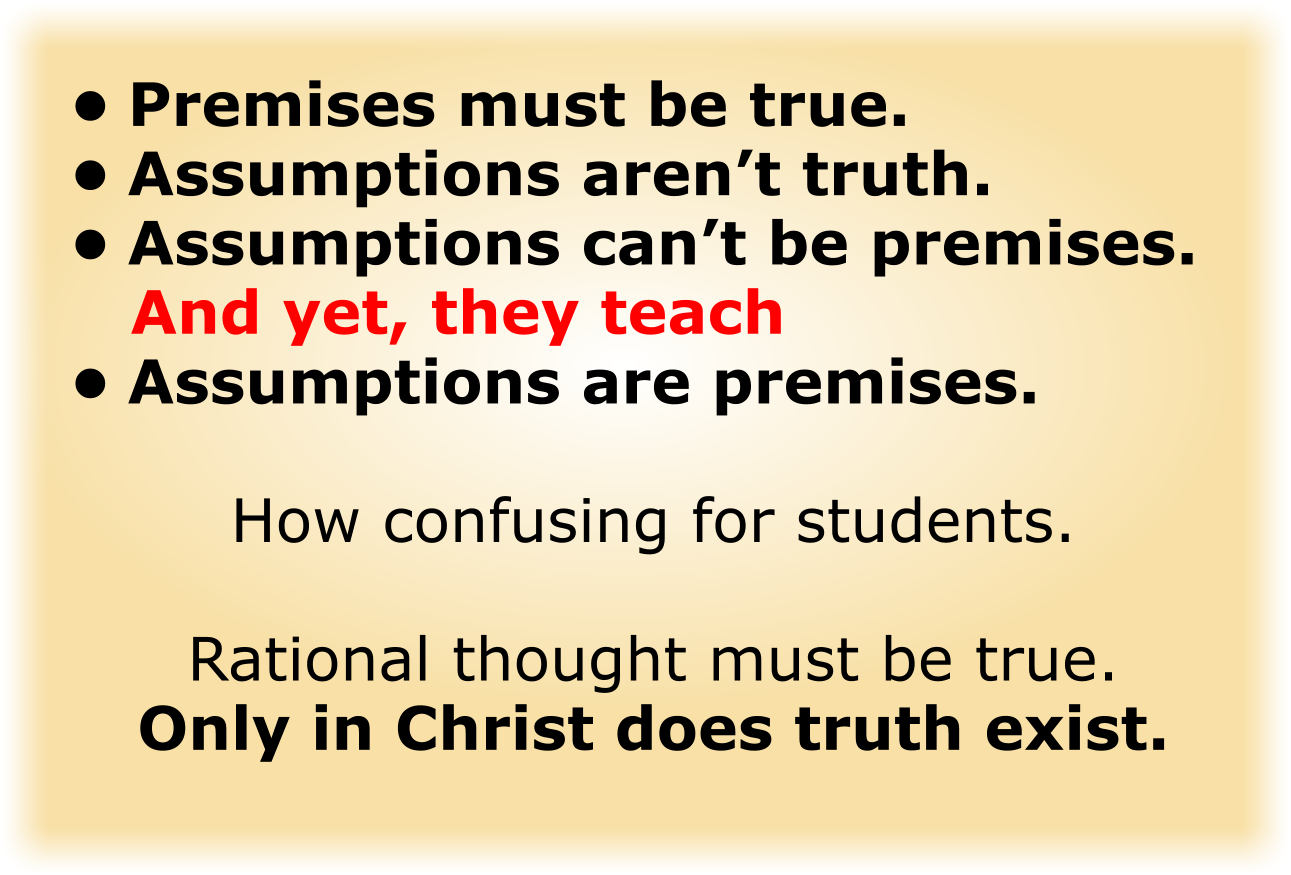
Teachers of logic talk a lot about some things called “syllogisms,” which are ways of stating logical arguments. Syllogisms assume true premises. However, those who teach about syllogisms rarely concern themselves with true premises. They just assume their premises. They refer to premises as assumptions. Here’s the problem. Premises must be true for logic to be sound, but assumptions are never known truth. Imagine how confusing that is for students.
• Premises must be known to be true.
• Assumptions are never known to be true.
• Assumptions are premises.
These teachers probably know their reasoning isn’t rational when they fail to base their reasoning on truth. They probably know sound logic requires true premises. They most likely know deep down that truth is absolute by definition. They must know the human mind has no path to truth on its own. And yet, these teachers don’t teach this to their students.
That’s why logic becomes incomprehensible and confusing to students, but the students finally conform to the idea that they don’t need true premises. The students may not even consider the question of whether they need true premises.
The teacher and the textbook may not talk about truth. The students then lose the distinction between reality and make-believe. They’ve been educated into a deep level of ignorance. This isn’t education. It’s brainwashing. Brainwashed people become dogmatic in their ignorance. As the Bible says, “Thinking themselves wise, they become fools.”