The people who have “ears to hear” are hearing the Voice Divine, and the children of redemption who have “eyes to see” are beholding the glory of the Lord! Charles S. Price

New Images Free Christian Memes
Memes You Can Use
The people who have “ears to hear” are hearing the Voice Divine, and the children of redemption who have “eyes to see” are beholding the glory of the Lord! Charles S. Price

Adoption is Sonship
New birth gives us the nature of God and the aid of the Holy Spirit is to school us for sonship. Sonship is when you have taken on the character of God owing to the working of the Servant, or Holy Spirit, in maturing you. ~ Herrick Holt

You need truth to think rationally. All truth is hidden in Christ.

The large social media companies are controlling the message through censorship and lying messages.
(Quote from https://realreality.org/downloads/how-god-will-transform-you/)

And lest there are some fearful saints, who think the measure of our heritage must be confined within certain limits, then God tells us exactly what those limitations are: “…And what is the exceeding greatness of his power to us-ward who believe, according to the working of his mighty power, which he wrought in Christ, when he raised him from the dead, and set him at his own right hand in the heavenly places…”(Eph. 1:19,20). There is the measure of the power that is available to the saints! ~ “Feast of Tabernacles”
For as in Adam all die, so in Christ all will be made alive. 1 Cor. 15:22

The false-prophet system uses sophisticated ways to persuade, coerce, and manipulate anyone foolish enough to stand in the council of their godless voices. They will deceive you and destroy you if you listen to them or watch them.
(Quote from https://realreality.org/downloads/how-god-will-transform-you/)

It is not a case of “How much will God give,” for He has already given us “All things,” Henceforth the question remains, “How much can I appropriate?” ~ “Feast of Tabernacles”
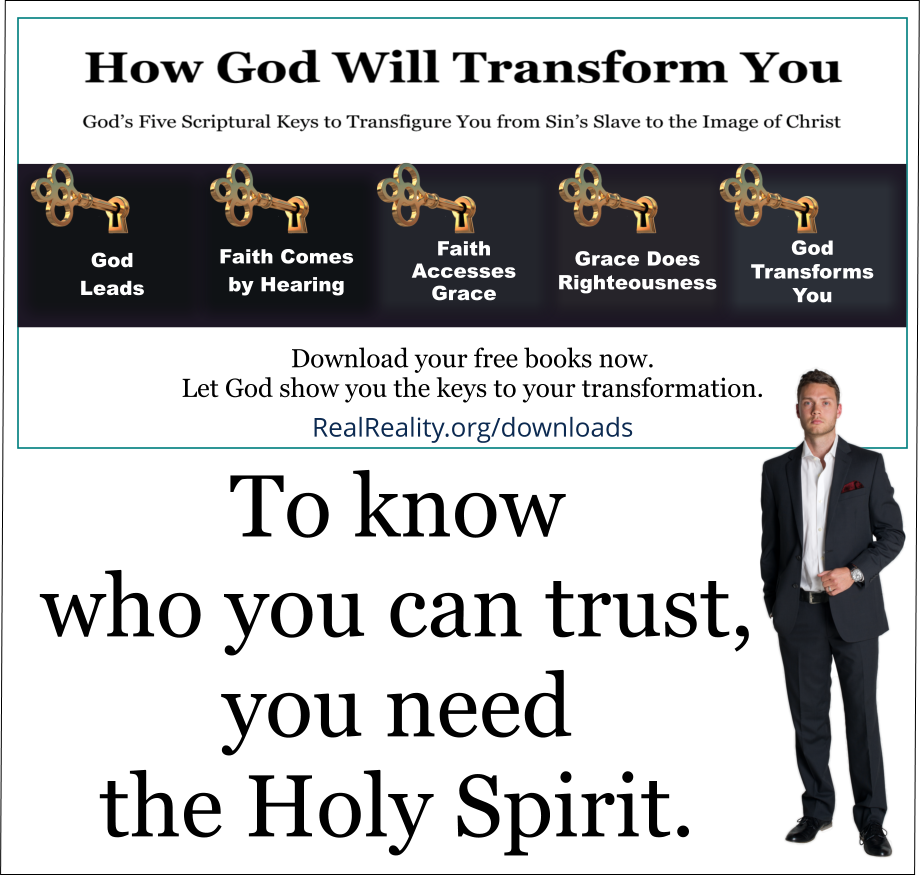
To know who you can trust, you need the Holy Spirit.
(Quote from https://realreality.org/downloads/how-god-will-transform-you/)

The extent to which we might reach out in the Spirit, and the limitations . . . . God said to Joshua, “Every place that the sole of your foot shall tread upon, that have I given you, as I said to Moses” (Joshua. 1:3). ~ “Feast of Tabernacles”

God speaks. God leads. (see Hebrews 3:15)

If you can imagine the many different types of media and education, they work together and act as one coordinated false-prophet system. You get some information from them, but you have to be on guard against the lies they tell.
(Quote from https://realreality.org/downloads/how-god-will-transform-you/)
It is not by our struggling. It is by our LETTING! Charles S. Price
The media and education systems are mostly captive to godless people.
(Quote from https://realreality.org/downloads/how-god-will-transform-you/)
With God all things are possible; we know that is true. But Jesus adds, “All things are possible to him that believeth.” ~ “Feast of Tabernacles”
God is forming you into the image and likeness of Christ.
Godless thinkers have captured every place of power and influence, so it’s almost impossible to avoid them.
(Quote from https://realreality.org/downloads/how-god-will-transform-you/)
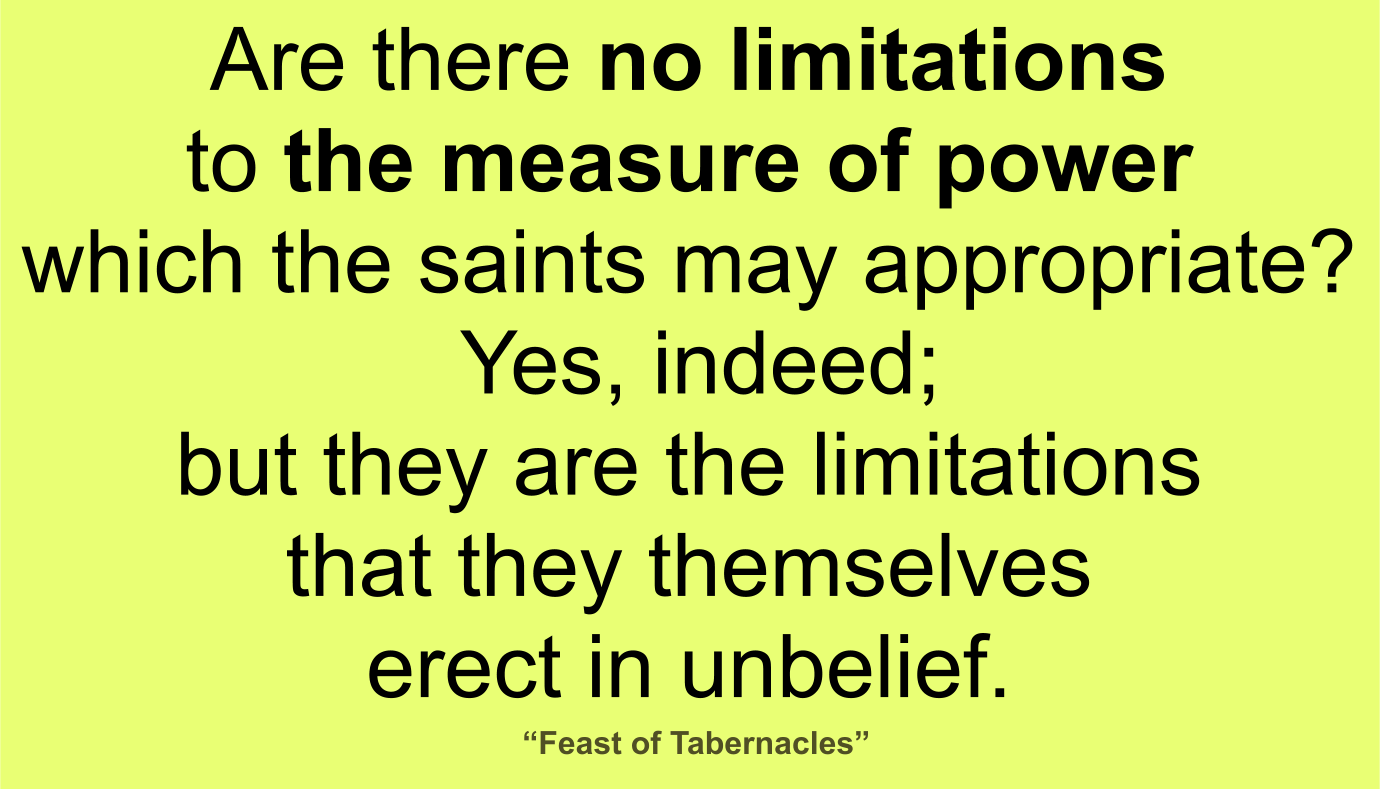
What then? Are there no limitations to the measure of power which the saints may appropriate? Yes, indeed; but they are the limitations that they themselves erect in unbelief. ~ “Feast of Tabernacles
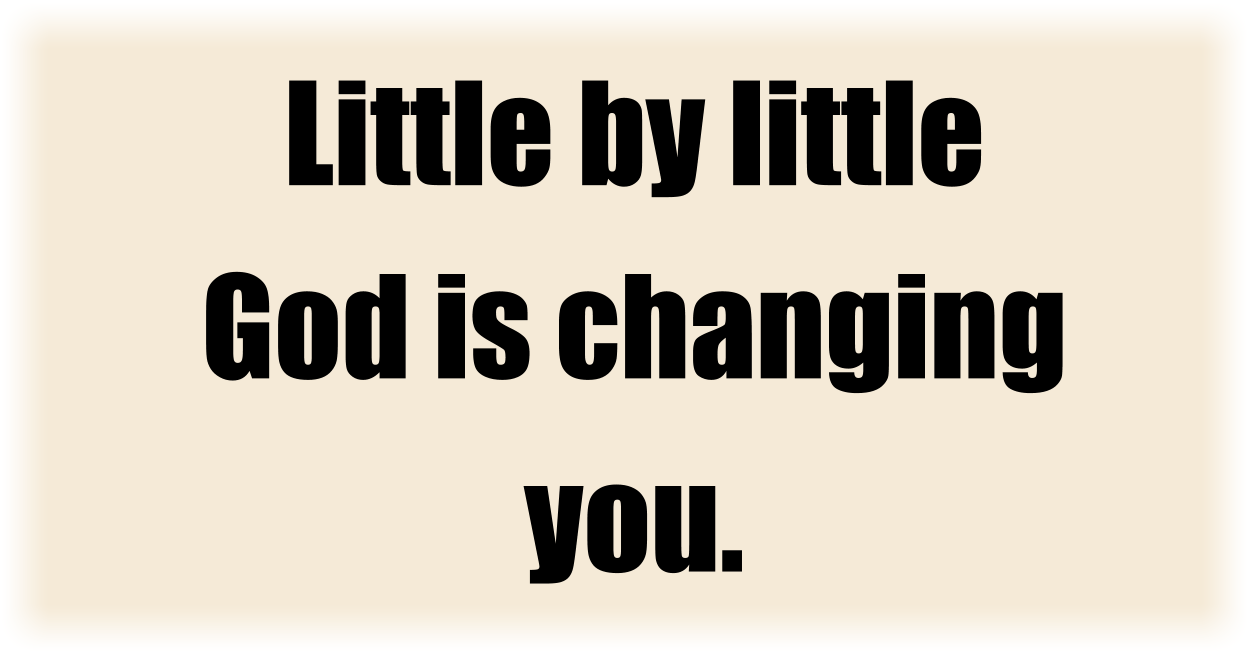
Little by little God is changing you. That is, if you are listening to His voice and walking in submission to His Spirit.